
History
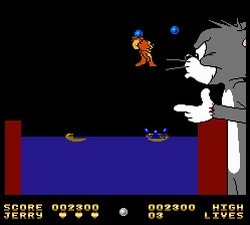
"Tom and Jerry" on NES is that quintessential cat-and-mouse platformer where a cartoon chase becomes a full-on adventure. You don’t remember it for high scores so much as for the vibe: Tom grumbles, Jerry zips past his whiskers, and you’re on the edge of your seat—leaping across shelves, dodging mousetraps, slipping into cracks. At home it was a team sport: one on the pad, the other backseat-calling where the cheese is, where the trap is, where the shortcut is. The name bounced around the playground—"Tom vs. Jerry," "Tom and Jerry," just "the cat-and-mouse game"—but the feeling was the same: an 8-bit classic about an endless chase. It’s all about jump timing, a clean burst of speed, and that controller-gripping itch that says: one more try and you’ll catch him.
The setup is simple and effective: in the early ’90s, the hit cartoon got translated into cartridge form. The apartment turns into an obstacle course—pots hissing in the kitchen, beams creaking in the basement, wind whistling in the attic; cheese chunks and heart pickups tucked away here, springboards and falling frying pans waiting there—and every face-off feels like a mini-boss beat. That’s how "Tom and Jerry on NES" stuck in our heads: an honest, energetic side-scroller you want to blaze through in a single sitting. Everyone had a trick: some hoarded lives, some hunted quiet routes and secret nooks. We’ve collected notes on how the duo jumped from TV to 8-bit stages in our history, and the hard facts and dates are always handy on the English Wikipedia. Call it "Tom and Jerry," "Tom and Jerry: The Chase," whatever you like—it’s that childhood staple where rhythm, finesse, and a pinch of luck make all the difference.
Gameplay
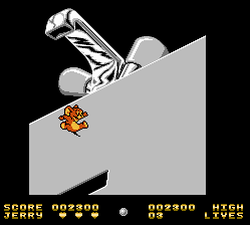
"Tom and Jerry" is that twitchy platformer where a cozy apartment suddenly turns gigantic and every shelf feels like a cliff edge. You’re the tiny escape artist, Tom’s breath on your neck, and the game’s rhythm pulls you along: jump, dash, pause, jump again. It’s the NES-era cat-and-mouse game—known as Tom and Jerry, Tom & Jerry, or simply Tom vs. Jerry—and it runs on raw emotion. First you grin at the cartoon mayhem, then you catch yourself timing jumps by the sweep of the second hand. Kitchen, living room, basement—everyday spaces turn into courses with their own rules: slick surfaces, treacherous edges, crafty footholds. Tom’s trademark chase isn’t a cutscene here; it’s constant pressure that tightens your grip on the controller and sharpens every step.
You grab cheese—not for points, but to stay on tempo; hearts wink when you’re about to give up; and behind a stack of books you suddenly spot a quick shortcut and shave the corner. This Jerry-led platformer keeps you not with difficulty for difficulty’s sake but with that “one more try and it’ll click” feeling. Tom sometimes looms ahead, sometimes pops from around a corner—like a boss without a title—and every clean maneuver is a small win in this endless cat-and-mouse chase. Chiptune in your ears, that familiar rush in your hands, and soon you know every stool and every windowsill. When you lock into the groove, a run through NES Tom & Jerry goes in one breath: hops across shelves become a melody, and your hands find the right pauses by themselves. We break down the level personality and the invisible spring that keeps nudging you forward in our gameplay breakdown—but here’s what matters: Tom & Jerry teaches you to hear the beat, look half a step ahead, and smile when that stubborn shelf finally gives.